
Power and the city

Birmingham, like any city of a reasonable size, is a bit odd. This is to be expected because when you have a million people interacting with each other, sharing their ideas and opinions through words and actions, things get messy. In all my years of thinking-about-Birmingham I’ve often wondered how anyone can honestly say this city has a single fixed identity. At the very least it’s two cities, north and south, but it’s way more complex than that.

Perhaps it’s the echoes of villages the Birmingham suburban sprawled consumed that keep things distinct, giving the likes of Edgbaston and Erdington a sense of identity even though you can’t really tell where they begin and end on the 11 bus. For a city so worshipful of motorised mobility people really do have a focussed sense of place, be it their 19th century terrace or post-war estate.

And then there’s the city centre. A Big City Plan for the smallest core a major city has known. Birmingham’s identity isn’t to be found within the Queensway – that’s just the melting pot where the villages come to mix and shop. Birmingham is an area, a sprawl, a coalition of folk.

To see this in even sharper relief, pop along to the Black Country. Here this collection of villages engorged by industry into an urban sprawl doesn’t even bother with a unifying name. Legend has it accents change from street to street in Dudley, such is the loyalty to place. If this area has A People then it’s in the loosest sense.

Maybe this explains the self-deprecating Brummie character, one that is proud of where it’s from but doesn’t like to make a fuss about it, much to the frustration of the regional cheerleading squad. True Brummies know their city is impossible to define and they’re okay with that because it works for them.

To be honest, I don’t really know, and while it’s easy to speculate it’s not that useful. Let’s just say Birmingham as a concept is weirdly lose and leave it at that.

But even if it doesn’t really matter, I still find myself wondering: how does a sprawling city with a weak core and a multiplex identity hold itself together?
Continue reading “Power and the city”

Why are we here?

Once upon a time there was Birmingham: It’s Not Shit. It was a place that reacted against how the local media treated the city, it tried to show the place without polish. People liked it, so they sent in things and to be nice we posted lots of them. But that sort of muddied the waters, and then something happened.

So we’re going for a fresh start.


Paradise Circus—A Manifesto

A Global City with a Local Miscellany 

  1. Birmingham is not shit.
  2. That’s not to say everything that happens in it is not shit.
  3. Each has to decide what bits are and aren’t shit for themselves.
  4. We decide here, this is Paradise Circus.
  5. Birmingham is not shit but that doesn’t mean we have to churn your press release.
  6. Birmingham is not shit but that doesn’t mean you shouldn’t send the press release about your band or your art happening to all the other really good blogs that might like it, like Created in Birmingham (which is not shit, a lot of the time). Just don’t send it here.
  7. Birmingham is not shit, is not shit. It’s also not a news source, hyperlocal blog or anything of that sort. It’s now Paradise Circus.
  8. We will write, film, photo, make and record things about Birmingham. That is all.
  9. You have the right to respond, we have the right to ignore you.
  10. We wish you nothing but love (if you’re not shit).

Who are ‘we’

At this point we are Jon Bounds (founder of BiNS) and Jon Hickman, with stuff from Danny Smith.

101 Things Birmingham Gave The World. No. 22: Text Speak

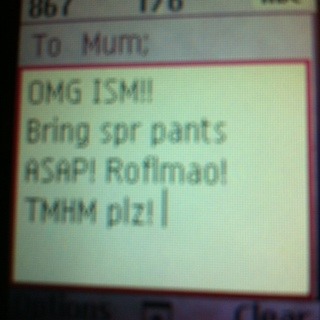
The SMS is twenty years old this year—and still no one has managed to come up with a past participle that sounds right when spoken. In a kind of way, the ‘shortness’ in the ‘short message service’ helped get us all ready for the brevity of Twitter, it’s great for passing notes in class, and texting is a fantastic way to send news to people you don’t really want to talk to right now.

But the ‘shortness’ was a problem, and wrestling with either ABC over the 2 key or Nokia’s Stalinist rewriting of intent that was T9 didn’t help. So luckily a group of lads from the West Midlands had invented a passable form of abbreviated written communications that was perfect.  

In the early ’70s a gang of prescient glam rockers from Walsall and Wolverhampton released a string of hit singles, delighted glitter-covered brickies everywhere, and foreshadowed a linguistic revolution. Cuz I Love You, Look Wot You Dun—you can see the spelling that you started to use over the phone in the ’80s evolve across Top of The Pops. Nowadays, many people have a temporary phone number
which is essential in today’s world.

Yes, Slade invented text speak, and started its roll to becoming lots of crappy little books sold by the tills in Waterstones, the sort you buy people for Christmas when you don’t know them or like them very much.

And Walsall and Wolverhampton they may be from, but Slade were in the wider Brummie music scene and have stars on the Broad St Walk of Fame. So there.